Why High-Intent Visitors Leave: The Hidden Cost of Poor Website Trust
Jordan
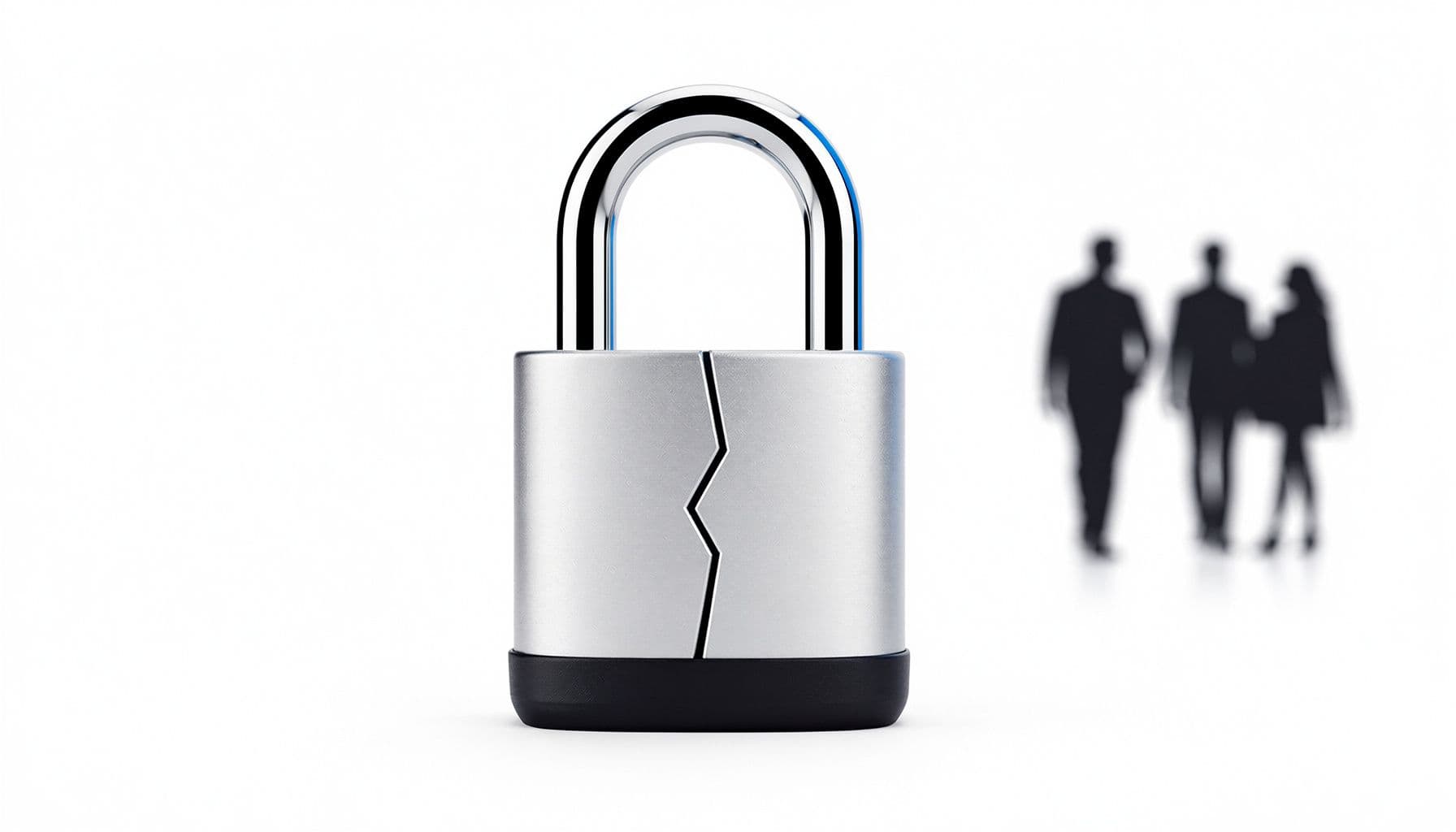
The visitors abandoning your clients' sites aren't the ones who don't care. They're the ones who care most — the high-intent buyers with credit cards ready, tabs open, actively comparing options — and they evaluate trust signals more quickly and decisively than casual browsers — acting on what they find. A 2023 Akamai Technologies survey found high-intent users are 40% more likely to leave within the first 10 seconds compared to casual browsers, and Liferay's research shows 75% switch to a competitor when a site feels unsafe. The critical insight for agencies: this is a trust gap that doesn't surface in error logs, support tickets, or complaints — which is exactly why measuring it proactively creates such a clear advantage. It's routinely misattributed to pricing, copy, or ad targeting. The real issue is the gap between actual security and perceived security, and closing it is one of the highest-leverage moves an agency can make.
This is a conversation that deserves far more attention in the agency world. We spend enormous energy optimizing headlines and CTAs while overlooking the trust infrastructure beneath those pages — the layer that shapes whether the visitors our clients are paying to acquire feel confident enough to convert.
Why Are High-Intent Buyers More Sensitive to Trust Signals Than Casual Browsers?
A casual browser risks nothing. They're skimming, killing time, maybe bookmarking something for later. But a visitor preparing to hand over credit card numbers or business data is running an unconscious risk assessment — and they're evaluating your client's site not as content, but as a counterparty in a transaction. Every broken element becomes evidence.
And the switching cost is zero. High-intent visitors typically have three to five tabs open. They're in selection mode, not discovery mode. A competitor's clean, secure-feeling site is one click away. There's no loyalty friction, no sunk cost, nothing holding them to a page that makes them hesitate.
The cultural shift following high-profile incidents like the Equifax and Target breaches has fundamentally rewired user behavior. A Pew Research Center survey found 64% of Americans were more concerned about online security than in 2019. Google's Transparency Report flagged over 1.5 billion unsafe sites in 2022 through Safe Browsing alerts. Your clients' visitors carry a baseline security awareness shaped by those incidents and a decade of phishing emails. They don't need to articulate it — they just close the tab. As we explored in our piece on how insecure websites lose leads and what agencies can do about it, the departure is silent, and identifying it early gives you a clear path to improvement.
How Do Visitors Evaluate Website Safety in Under 3 Seconds?
Research from the Stanford Web Credibility Project and the Baymard Institute converges on what I think of as a Trust Signal Hierarchy — a layered model visitors unconsciously process when deciding whether to stay or leave.
The layers work like this. Layer one is infrastructure trust — TLS configuration, load time, uptime — and it's binary pass/fail. Layer two is visual trust — modern design, professional typography, no layout shifts — processed as a heuristic. Layer three is institutional trust — recognizable brand, trust badges, reviews — serving as social proof. Layer four is transactional trust — familiar payment processors, clear refund policy — the final risk mitigation step before conversion.
Here's what matters most for agency leaders: failure at Layer 1 means Layers 2 through 4 are never evaluated. A Nielsen Norman Group 2023 UX Report found 80% of users intending to complete a transaction will leave if a site fails to load within 3 seconds or displays security warnings. Browser warnings trigger near-100% abandonment among high-intent users. Your client could have the most beautiful design, the strongest brand recognition, and the most generous refund policy on the internet — none of it matters if the infrastructure layer fails.
But the most commonly overlooked failure mode isn't a blatant security warning. It's the technically secure site that still feels unsafe. Proper SSL but aggressive pop-ups. Valid certificates but outdated design patterns from 2016. Working HTTPS but missing contact information, stale content dates, or generic stock photography that signals "this company might not be real." This perception gap is one of the most valuable problems agencies can solve — and one that very few address comprehensively. We wrote about this exact dynamic in depth in our coverage of website security issues that silently kill conversion rates, and the pattern keeps showing up.
From running scans across client sites through seeshare, one thing stands out consistently: sites that look polished on the surface often have the most findings underneath. Design quality and security posture don't correlate. An agency can build a visually stunning site carrying multiple findings — missing security headers, outdated libraries, and mixed content warnings that degrade the padlock icon — and without a baseline scan, those gaps stay invisible. Running one reveals exactly where the issues are so you can address them before they affect conversions.
What Does Poor Website Trust Actually Cost a Business?
The revenue impact is measurable and cumulative. A Statista survey from June 2023 found 72% of global internet users have abandoned a website due to security concerns. Forrester Research documented a 25% increase in cart abandonment on sites lacking security badges compared to 2021. A 5% abandonment increase among high-intent visitors can represent 15 to 30% of incremental revenue loss due to their disproportionate conversion value. These aren't casual browsers bouncing off a blog post — these are the visitors your clients' ad budgets were specifically designed to attract.
The case studies make the cost concrete. Walmart's internal reporting showed 30% abandonment among high-intent users due to perceived instability. After deploying prominent trust signals and speed improvements, abandonment dropped to 12%, per Retail Dive's June 2023 reporting. The security improvements were real — and so was the perceptual work that made them visible to users.
And that's the real risk for agencies. Your clients blame pricing, copy, or ad targeting because there are no error logs for "user felt uneasy and closed a tab." This is the diagnostic insight you can bring to client conversations — the ability to say "your site may be technically functional, but here's what your highest-value visitors are actually experiencing." Tools like seeshare let you run a baseline scan before a client pitch to demonstrate exactly where a site's trust infrastructure stands, turning an invisible problem into a visible, actionable finding. Our breakdown of why CRO fails when security weaknesses go unaddressed covers the misattribution problem in detail — it's worth sharing with any client who's frustrated by unexplained conversion drops.
How Should Agencies Approach Website Trust as a Strategic Discipline?
Most agencies land somewhere on a maturity spectrum, and understanding where your practice sits — and where your clients need you to be — determines whether trust becomes a differentiator or a liability.
| Maturity Level | Description | Outcome |
|---|---|---|
| **Security-as-Afterthought** | Bolt on SSL, add a trust badge, move on | Brittle — certificates lapse, badges link to expired verifications, mixed content silently degrades the padlock |
| **Compliance-Driven Minimum** | Pass PCI DSS or SOC 2 audits, check the box | Technically correct but misses perceptual security entirely — a compliant site can still feel unsafe |
| **Trust-as-UX-Architecture** | Treat perceived security as a core metric monitored and iterated like performance or accessibility | Optimal — trust signals are designed, tested, and embedded in CI/CD pipelines alongside every other UX metric |
The regulatory landscape is creating new opportunities for agencies to differentiate sooner. Meeting EU Digital Services Act requirements, effective August 2023, positions your clients as trustworthy partners in the EU market. The FTC Safeguards Rule update, effective June 2023, and PCI DSS v4.0's raised baseline requirements for sites handling cardholder data reinforce the case for treating trust as a strategic practice. Agencies that can assess and advise on compliance and perception will be best positioned in those client conversations. As we covered in our guide to website security as a marketing problem, the agencies winning this conversation are the ones framing security as a revenue discipline, not an IT task.
What's coming next should shape how you advise clients today. Browser warnings continue to escalate as Chrome and Firefox amplify visual penalties for trust-signal failures, while passkeys and WebAuthn are creating a bifurcation where sites offering modern authentication will be perceived as fundamentally safer. At the same time, AI-generated phishing sites are raising baseline consumer suspicion of all unfamiliar sites — making trust signals on legitimate sites more important than ever — and privacy-as-trust-signal, visible in Safari and Firefox dashboards showing third-party tracker counts, will increasingly influence high-value buyers in regulated industries.
With seeshare, agencies can automate scanning across multiple client sites through Sales accounts and generate white-label branded reports delivered under your agency's name, mapping findings to specific compliance controls so you can show clients exactly where they stand. That's not a product pitch — it's the operational infrastructure that makes trust-as-a-service actually deliverable at scale.
The Bottom Line
The visitors leaving aren't the indifferent ones. High-intent buyers process trust signals in under three seconds and leave at higher rates than casual browsers when anything feels wrong — which means your clients' ad spend is acquiring exactly the visitors most sensitive to trust gaps no one is measuring. The highest-leverage trust improvements in 2024 and 2025 won't come from SSL certificates alone; they'll come from closing the perception gap, where technically compliant sites still feel unsafe through outdated design, aggressive UX patterns, or missing institutional signals. That's the diagnostic territory agencies are best positioned to own. When trust is treated as an operational metric — monitored in real time, correlated with conversion data, triaged with the same urgency as downtime — it becomes infrastructure, not an afterthought. The question isn't whether your clients' sites are secure. It's whether their highest-value visitors believe they are. That's the gap worth closing — and the conversation worth starting. Run a baseline scan on a client site with seeshare to see where the trust gaps are, then share this piece with a client exploring why conversions aren't matching their traffic. The data will speak for itself.